
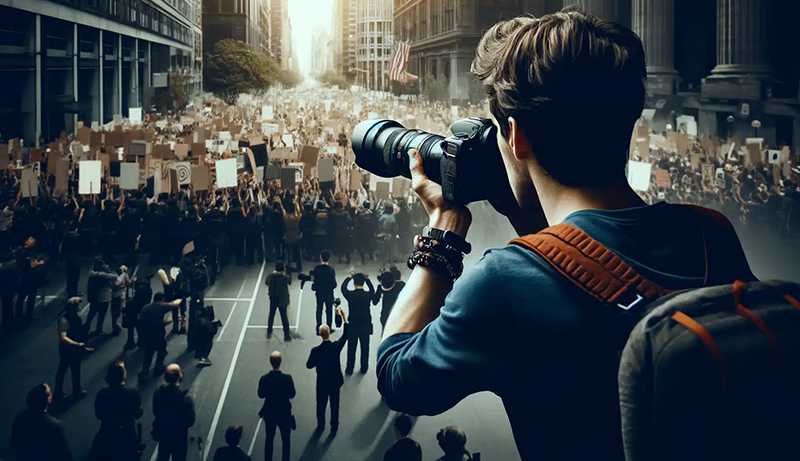
Journalism is a demanding profession that requires critical thinking, navigating complex situations, and problem-solving skills. The challenge intensifies when it comes to capturing the perfect shot.
To support photojournalists in their work, we’ve compiled a guide to some of the best cameras available, including the Fujifilm X-T4 and the Sony Alpha A9 II, among others.
Top pick
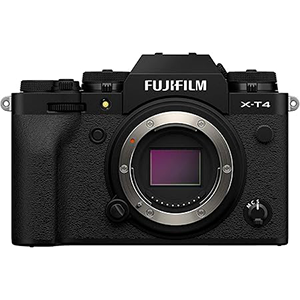
Fujifilm X-T4
Editor’s choice
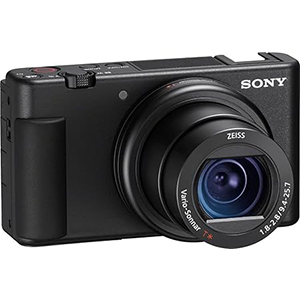
Sony ZV-1
Best value
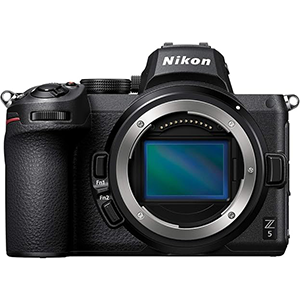
Nikon Z 5
What is the Best Camera for Photojournalism?
Photojournalists have the power to tell compelling stories and shape the way we see the world through their images. Their work plays a crucial role in society by bringing untold stories to light.
While becoming a professional photojournalist requires years of practice, we believe the Fujifilm X-T4 is an excellent camera for those looking to develop their skills. It can help you progress from a beginner to a skilled amateur quickly.
1. Fujifilm X-T4
The Fujifilm X-T4 is an outstanding choice for those looking to enhance their storytelling through photography and video. Equipped with advanced image processing technology and high-resolution capabilities, this camera excels at capturing stunning 4K video at 60 FPS. Whether you’re shooting a documentary or taking still photos, the X-T4’s compact and lightweight design ensures exceptional results every time.
With the ability to shoot at an impressive 15 frames per second and featuring 5-axis image stabilization combined with a 4-axis digital image stabilizer, the X-T4 minimizes camera movement for sharp, stable images, even when filming.
Designed for durability, the X-T4 is built to withstand harsh conditions, allowing you to continue shooting regardless of the weather. The new Vari-angle touchscreen LCD provides excellent shooting flexibility, whether you’re using the viewfinder or the rear screen.
In summary, the Fujifilm X-T4 is a powerful tool for those looking to elevate their photography and videography. While it comes with a higher price tag, the combination of features and functionality makes it a worthwhile investment for anyone serious about their journalism work in the years to come.
Pros
- Excellent value
- Outstanding image quality
- Sturdy build
- Great low-light performance
- Reliable battery life
Cons
- Autofocus for videos could be better
2. Sony ZV-1
The Sony ZV-1 is an excellent budget-friendly option for journalists. Originally designed for vlogging, this camera offers the best of both worlds, combining the versatility of a camcorder with the quality of a camera. It’s durable, easy to use, and compact enough to carry in your bag without adding extra weight.
The ZV-1 is packed with features to help you capture the perfect shot. It boasts a 20.1MP CMOS sensor and a fast hybrid autofocus system, ensuring your subjects stay sharp with real-time eye autofocus and tracking. The 24mm F1.8 ZEISS Vario-Sonnar T lens delivers exceptional image quality, wide coverage, and superior sharpness.
Where the ZV-1 truly excels is in video recording. It captures stunning 4K HDR footage, complemented by excellent audio from its forward-directional onboard mic with a detachable windscreen. You can also attach an external mic for even better audio quality.
With built-in WiFi, the ZV-1 allows you to Livestream, share your work instantly, and transfer or edit files wirelessly. The side flip-out 3-inch LCD screen tilts up and down, making it easy to record yourself while reporting. Best of all, the ZV-1 delivers these features at a fraction of the cost of most high-end mirrorless cameras and camcorders.
Pros
- Affordable
- Best-in-class autofocus
- Compact and portable design
- Supports live streaming
- Exceptional audio quality
Cons
- Poor battery life
3. Nikon Z 5
If you’re searching for the best value in a camera, the Nikon Z5 is an excellent choice. It offers many of the same features as the full-frame flagship Z7 II, and more, at less than half the price. With solid performance, intuitive controls, and an attractive price point, the Z5 is a true gem worth considering.
The versatile Nikon Z5 is designed to enhance your photography while delivering high-quality results. Its 24MP sensor and efficient 273-point autofocus system allow you to capture detailed images and lifelike 4K video, even in challenging low-light conditions. The built-in VR image stabilization ensures sharp images in low light, and the large electronic viewfinder provides an outstanding shooting experience.
Overall, the Nikon Z5 is more than just an everyday mid-range camera; it’s a full-frame powerhouse. With a rich feature set, impressive battery life, and dual card slots, it’s built to handle long shoots without needing frequent recharges or extra memory.
For its price, the Nikon Z5 spoils you with features, making it a fantastic investment for any photographer.
Pros
- Excellent value for money
- Ergonomic design
- Full-frame sensor
- Dual SD card slots
- Impressive battery life
Cons
- Cropped 4K video
4. Canon EOS R3
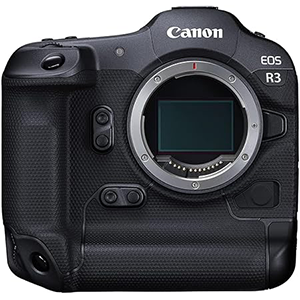
If you’re a seasoned professional in the industry, you need a camera that reflects the quality and expertise you’ve developed over the years. In that case, we highly recommend the Canon EOS R3.
At the heart of this powerful model is a 24.1MP full-frame sensor paired with a DIGIC X image processor, capable of shooting blackout-free stills at an impressive 30 FPS and capturing 6K RAW video at 60 FPS. With enhanced Dual Pixel CMOS AF performance and advanced Eye Control AF, the EOS R3 delivers industry-leading image quality with unmatched dynamic range, detail, and low noise.
One of the standout features of the Canon EOS R3 is its ability to record cinematic RAW video at 6K resolution and 4K 10-bit (uncropped) footage with Canon Log 3 at 120 FPS. This means you can achieve exceptional detail and richness in your footage, setting it apart from other cameras in its class.
If you’re gearing up for intensive documentary or journalism work, the Canon EOS R3 should be at the top of your list.
For professionals, the Canon EOS R3 is an investment that matches your experience and demands, delivering top-tier performance in every aspect.
Pros
- Professional-quality stills
- 6K RAW video capability
- Excellent autofocus system
- Extensive connectivity options
Cons
- Expensive
5. Sony a9 II
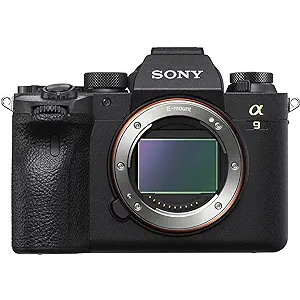
If you’re a sports journalist with a keen interest in capturing high-speed action, the Sony Alpha A9 II is your top choice. This powerful camera is designed specifically for sports photography, combining a lightning-fast 24.2 MP CMOS sensor with an impressive 60 AF area selection points, advanced subject recognition, and blackout-free shooting at 20 FPS. The result? Crystal-clear images of even the most fast-paced action.
The Sony Alpha A9 II also features cutting-edge technology, including a Transfer & Tagging system that allows you to capture up to 50 seconds of speech and convert it into an image caption. With built-in 5GHz Wi-Fi for rapid file transfers and a new mechanical shutter designed to minimize vibration, this camera is perfect for solo reporting and wireless shooting.
Additionally, the Alpha A9 II supports 4K video recording, enabling you to capture high-quality footage at full resolution. This camera is an engineering marvel and stands out as one of the best options for sports journalism.
For sports journalists, the Sony Alpha A9 II offers unparalleled performance, making it a worthy investment for capturing dynamic, fast-moving scenes.
Pros
- Articulating display
- Exceptional stills and 4K video quality
- Superb autofocus system
- 5-axis in-body image stabilization (IBIS)
Cons
- High price tag
How to Choose the Best Camera for Photojournalism
Now that you have a general idea of what to consider, let’s dive into the specifics. Here’s a comprehensive guide on how to choose the best camera for journalism:
Type of Camera
There are several types of cameras available, each with its own set of advantages. Here’s a quick overview of the most popular categories:
- DSLR: These cameras feature interchangeable lenses and large sensors, allowing them to capture more light and produce superior image quality compared to point-and-shoot cameras. DSLRs also provide manual control over settings like shutter speed, aperture, ISO, and exposure compensation, making them ideal for those looking to hone their photography skills. While they can be pricey, the image quality is outstanding.
- Mirrorless: Similar to DSLRs, mirrorless cameras use an electronic viewfinder instead of an optical one, which allows for easier composition, especially in action shots. Without the need for additional optics for focusing, mirrorless cameras are currently the most popular type, offering excellent image quality in a compact form.
- Point-and-Shoot: Ideal for beginners and those on a budget, point-and-shoot cameras are user-friendly and don’t require much technical knowledge. While they can be used in various settings, they may struggle in low-light conditions and typically lack the option for interchangeable lenses.
Megapixels
Megapixels indicate the number of pixels that make up your photo or video. While higher megapixel counts mean more detail, this has become less critical with advancements in image processing software. However, for highly detailed photos, aim for a camera with at least 20MP.
Sensor Size
The sensor size affects how much light the camera can capture, influencing photo quality, especially in low-light conditions. Larger sensors can capture more light, resulting in better image quality.
Common sensor sizes include:
- 1-inch sensor: Found in budget point-and-shoot cameras.
- APS-C: Used in advanced compact cameras, mirrorless, and DSLRs.
- Full-frame sensor: Found in high-end cameras, offering the best image quality.
Frames per Second (FPS)
FPS determines how many shots your camera can take per second, affecting the smoothness of stills and video footage, especially in fast-motion or slow-motion scenarios.
Video Resolution
For high-quality journalism content, a video resolution of at least 1080p is ideal. However, 4K resolution is now the standard, particularly if you plan to broadcast content on platforms like YouTube.
Connectivity
Connectivity features like WiFi and Bluetooth allow you to connect your camera directly to your smartphone or desktop, eliminating the need for external docking stations or cables. This is especially useful for live broadcasts or quick file transfers.
Size and Weight
As a reporter, your camera should be lightweight and portable, making it easy to carry during your travels. At the same time, it should be comfortable to use for extended periods.
Conclusion
These are some of the best cameras for photojournalism, each designed to help you capture compelling stories. The key is to choose the one that best fits your needs and budget.
If you require advanced features and capabilities, it may be worth investing in a higher-end model. However, if you’re looking for something reliable and straightforward, many of the cameras on this list will serve you perfectly.


Leave a Reply