
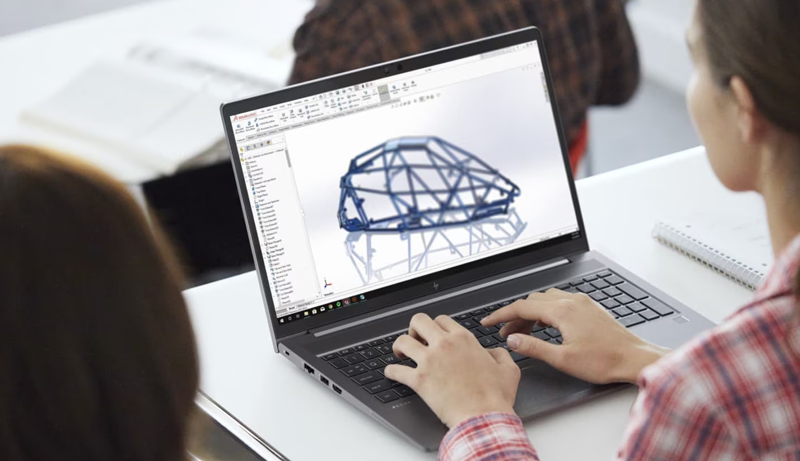
Choosing the best laptop for SolidWorks requires a careful balance of power, stability, and long-term reliability. SolidWorks is a demanding 3D CAD application that relies heavily on strong CPU performance, robust graphics capabilities, and accurate display output for complex modeling, simulation, and rendering tasks. Whether you’re an engineering student, professional designer, or product developer, your laptop must deliver consistent performance under heavy workloads such as assemblies, motion studies, and high-precision visualization.
A great SolidWorks laptop should feature a high-performance processor capable of handling multithreaded workloads efficiently. A workstation-class or advanced gaming-class GPU is equally essential, ensuring smooth handling of large assemblies and real-time rendering. Additionally, high-quality displays with accurate color reproduction improve your ability to review fine details and design with confidence.
Thermal performance is also important; SolidWorks sessions are long and resource-intensive, so a laptop with effective cooling helps maintain peak performance without throttling. Connectivity matters too—multiple USB ports, Thunderbolt support, and reliable external display options make it easier to integrate with peripherals like 3D mice, drawing tablets, and external monitors.
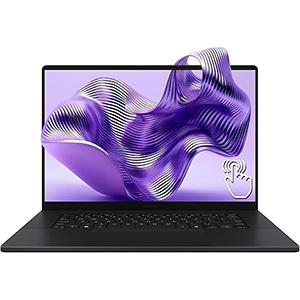
ASUS ProArt P16
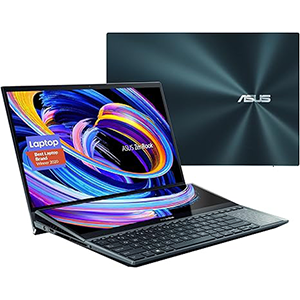
ZenBook Pro Duo 15
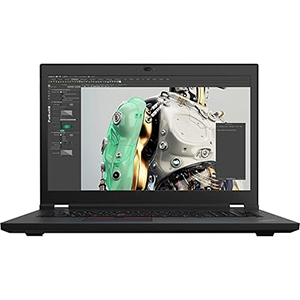
Lenovo ThinkPad P17 G2
When working with complex 3D modeling, rendering, and simulations, choosing the Best Laptop for Solidworks is essential. Solidworks demands machines with powerful graphics, robust processors, and optimized performance for handling heavy design files. A reliable laptop ensures smooth multitasking, precise modeling, and efficient workflow for professionals, engineers, and students who need seamless performance in their CAD projects.
1. ASUS ProArt P16
This model stands out as a powerful mobile workstation crafted for creators, engineers, and professionals who depend on precision and performance. It features a highly capable processor designed to handle demanding CAD workloads, simulations, and multitasking without slowing down. Its advanced GPU accelerates rendering, modeling, and real-time viewport performance in SolidWorks, making it a strong choice for users who frequently work with complex assemblies or visual content.
The 16-inch OLED touchscreen elevates the experience with exceptional color accuracy, deep contrast, and sharp detail. This is particularly beneficial for engineers and designers who require dependable visuals for reviewing designs or inspecting fine geometric features. The ultra-responsive panel also helps during presentations, concept sketching, and 3D visualization.
Another major strength is its connectivity. Packed with high-speed ports—including next-generation USB options, HDMI, and an SD Express card reader—it easily integrates into a full workstation setup. Whether connecting external drives, monitors, or specialized design peripherals, the device provides seamless flexibility. The build quality is solid and optimized for professional environments, offering both portability and reliable cooling.
Overall, this laptop delivers a compelling combination of power, display precision, and workflow-friendly features—making it an excellent choice for SolidWorks professionals, creators, and engineers on the move.
Pros
- Exceptional display clarity and color accuracy
- Strong performance for CAD, modeling, and rendering
- Robust GPU for real-time engineering tasks
- Excellent connectivity with multiple high-speed ports
- Portable yet durable professional build
Cons
- OLED display may consume more power
- Touchscreen may not appeal to all users
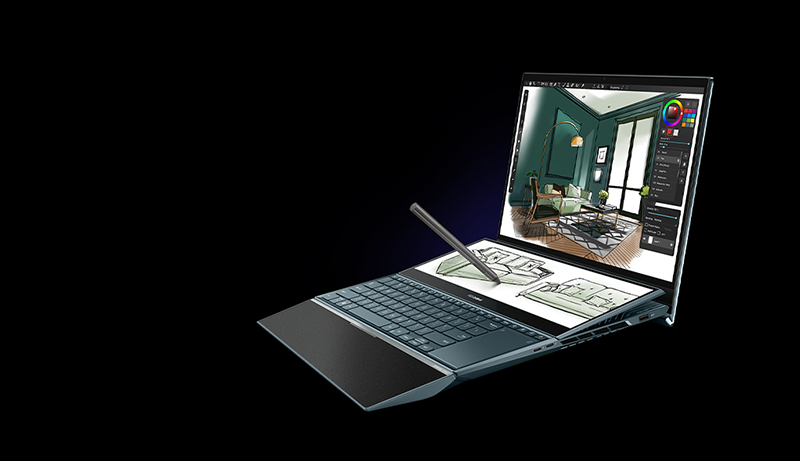
2. ASUS ZenBook Pro Duo 15 OLED
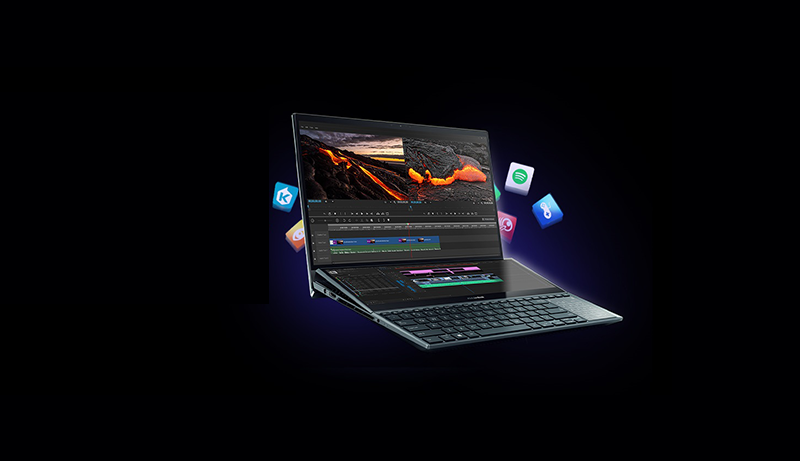
This laptop is designed for users who want maximum multitasking efficiency and visual immersion. Its defining feature is the dual-screen layout, combining a stunning 4K OLED primary display with a uniquely positioned secondary panel. This setup is ideal for engineers and designers who frequently work with reference materials, toolbars, simulations, or side applications while keeping SolidWorks uncluttered.
The main display offers exceptional brightness, clarity, and color accuracy—perfect for detailed modeling, rendering previews, and precision-driven design tasks. The secondary ScreenPad Plus tilts upward for improved ergonomics, transforming the workflow by enabling split-task efficiency such as monitoring rendering progress, using SolidWorks add-ins, or managing documentation.
Performance-wise, the machine delivers the power needed for 3D CAD applications, complex assemblies, and engineering software. The dedicated GPU provides reliable acceleration for rendering and viewport responsiveness, while the cooling system supports extended workloads. Its build quality meets strict durability standards, making it suitable for frequent travel or field work.
This laptop also includes several ergonomic enhancements such as an elevated keyboard angle, a detachable palm rest, and stylus support for conceptual sketching. It is a strong option for professionals seeking power, display quality, and a unique multitasking advantage.
Pros
- Outstanding 4K OLED display for precise visual work
- Dual-screen design boosts productivity
- Strong GPU for engineering tasks
- Durable construction for professional use
- Excellent for multitasking, CAD tools, and creative workflows
Cons
- Dual screens increase heat under load
- Enlarged chassis reduces portability
- Secondary screen may require workflow adaptation
3. Lenovo ThinkPad P17 G2
This workstation-class laptop is engineered for professionals who need unmatched durability, power, and screen real estate. Its large 17.3-inch display provides ample room for handling complex SolidWorks assemblies, detailed sketches, and multitasking across engineering tools. The overall structure is rugged, reliable, and optimized for long-term professional use, especially in demanding industrial, engineering, or enterprise environments.
Performance is a core highlight. The high-performance processor delivers excellent single-thread and multithread responsiveness, ensuring smooth execution of simulations, modeling, and large assembly manipulation. The dedicated professional-grade graphics solution enhances rendering accuracy and stability, making this laptop well-suited for SolidWorks, CAD, and other graphics-intensive workflows.
Its generous connectivity options allow seamless expansion with monitors, docking stations, measuring devices, and specialized engineering tools. The keyboard is one of ThinkPad’s strong points, offering exceptional typing comfort—critical for long periods of design, documentation, or coding.
This laptop is larger and heavier than most competitors, but this size brings enhanced thermal performance, better cooling, and higher sustained speeds under heavy workloads. It is ideal for users who prioritize uncompromising performance and workstation stability over portability.
Pros
- Large display ideal for complex assemblies
- Professional-grade graphics for CAD accuracy
- Strong processing power for engineering tasks
- Exceptional durability and long-term reliability
- Excellent keyboard and workstation connectivity
Cons
- Heavy and less portable
- Bulkier design not ideal for travel
4. Microsoft Surface Laptop Studio
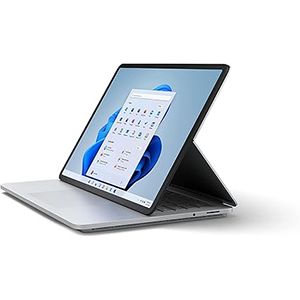
This model is designed with flexibility and creative performance in mind. Its transformable form factor allows it to switch between laptop mode, stage mode, and studio mode—providing a versatile setup for SolidWorks users who also engage in sketching, concept design, or presentation work. The 14.4-inch high-refresh touchscreen delivers smooth visuals and precise input, especially when paired with a compatible stylus.
Performance is strong for engineering tasks, with a capable processor that supports modeling, simulation, and multitasking across SolidWorks and related applications. The dedicated GPU enhances real-time rendering and viewport manipulation, making it suitable for assemblies and graphical workloads. The design prioritizes premium build quality, user comfort, and smooth transitions between work modes.
Its display offers uniform color accuracy and great clarity, making it useful for design reviews, visual renderings, and presentation content. The advanced hinge mechanism is robust and offers a professional feel, ideal for engineers who split their time between technical modeling and creative ideation.
Connectivity, build quality, and portability are well-balanced. While not the most powerful workstation on the list, its hybrid design makes it attractive for users who want both engineering capability and creative flexibility.
Pros
- Innovative multi-mode design for versatile workflows
- Smooth and responsive touchscreen
- Strong GPU acceleration for design and modeling
- Great for sketching and creative tasks
- Premium build quality and modern engineering features
Cons
- Battery performance may vary under heavy workloads
- Some users may experience display quirks
- Not as powerful as larger workstations
5. Lenovo ThinkPad X1 Carbon Gen 11
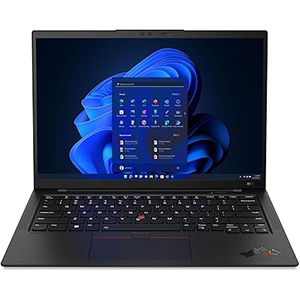
This model is engineered for professionals who need a lightweight yet highly capable laptop for engineering work, business tasks, and mobility. Despite its compact form factor, it delivers impressive performance suitable for SolidWorks modeling, moderate assemblies, and productivity demands. Built on a premium professional framework, it offers a refined keyboard, durable construction, and enterprise-grade reliability.
The anti-glare touchscreen ensures visual clarity and comfort, particularly when reviewing designs, navigating CAD interfaces, or multitasking across various engineering tools. The display’s excellent color accuracy and comfort-focused technology make it ideal for long working sessions.
Its processor enables efficient handling of daily CAD workflows, simulation preparation, and engineering documentation. While it may not be intended for massive assemblies or heavy rendering workloads, it offers more than enough power for portable engineering use. Connectivity options such as Thunderbolt ports allow users to attach external GPUs, monitors, or high-speed peripherals, expanding its capabilities into a more robust workstation when needed.
This model excels in build quality, portability, stability, and user experience—making it ideal for engineers or professionals who travel frequently but still require dependable performance for SolidWorks.
Pros
- Lightweight, portable, and highly durable
- Excellent keyboard for prolonged use
- Crisp touchscreen with strong visual accuracy
- Ideal for portable engineering workflows
- Professional connectivity for peripheral expansion
Cons
- Not intended for very large assemblies
- Smaller screen may limit detailed workspace
- Thermal output can increase under continuous load
Choosing from the Best Laptop for Solidworks
Selecting the Best Laptop for Solidworks requires careful attention to performance, stability, and usability. Since Solidworks is a resource-intensive application, the right machine ensures smooth modeling, rendering, and simulations without disruptions. Understanding which features matter most will help you make the best decision.
Processor Power
Solidworks relies heavily on processor performance for tasks like modeling and simulation. A high-performance CPU ensures complex assemblies run smoothly and efficiently. Choosing a laptop with multiple cores helps balance multitasking while maintaining speed during intensive workloads.
Graphics Capability
Solidworks depends on GPU strength for rendering, visualization, and 3D modeling. A laptop with a certified professional graphics card or a high-end GPU ensures smoother navigation and accurate visual results. The GPU also plays a role in speeding up rendering times, making design workflows more efficient.
RAM and Memory
Handling large assemblies requires sufficient memory. At least 16GB of RAM is recommended for professional use, but more may be necessary for complex projects. Adequate RAM ensures seamless switching between tasks, better responsiveness, and stability when working on detailed designs.
Display Quality
A sharp and color-accurate display is essential when working on detailed CAD models. A larger screen size or high-resolution panel allows precise viewing, reducing eye strain and improving accuracy. Touchscreen or secondary display features may also support creative workflows.
Build and Reliability
Since Solidworks projects often involve long hours of work, choosing a laptop with efficient cooling and durable construction ensures consistent performance. A strong chassis and professional-grade keyboard enhance usability for everyday tasks.
Portability vs. Performance
Users who travel frequently may prefer a lighter laptop that balances portability with power. However, those working on advanced simulations may benefit more from workstation-style machines designed for maximum performance.
Battery and Connectivity
Battery life supports mobile use, though performance should remain the priority. Multiple ports and fast connectivity options also help when linking to external monitors, peripherals, or shared networks.
By considering these factors, you can select the Best Laptop for Solidworks that matches your needs—whether you prioritize power, portability, or visual clarity.
SolidWorks Laptop Comparison Table
| Feature | Best Choice | Good Choice | Optional / Depends on User |
|---|---|---|---|
| CPU Type | High-frequency H/X series | Mid-range modern processors | Ultra-low-voltage CPUs (not ideal) |
| GPU Type | Workstation GPU (Quadro/Radeon Pro) | Gaming GPU (RTX series) | Integrated GPU (not for SolidWorks) |
| Display | 4K or 2K OLED/IPS | Full HD IPS | Touchscreen |
| Memory | High-speed dual-channel | Standard dual-channel | Single-channel (avoid) |
| Storage | PCIe Gen 4 NVMe | PCIe Gen 3 NVMe | SATA SSD (slower) |
| Cooling | Multi-pipe or vapor chamber | Dual-fan cooling | Thin single-fan cooling (weak) |
| Port Selection | Thunderbolt + multiple USB | HDMI + USB combo | USB-only ultrabooks |
| Durability | Workstation build quality | Mid-range metal chassis | Plastic builds (less durable) |
| Use Case Fit | Large assemblies, simulations | Moderate assemblies | Simple part modeling only |
Buying Mistakes to Avoid
Mistake 1: Choosing a laptop with many cores but low clock speed
SolidWorks relies more on frequency. More cores don’t always equal better performance.
Mistake 2: Buying an ultra-thin laptop for heavy engineering work
Thin models overheat quickly and throttle, reducing performance.
Mistake 3: Ignoring the GPU type
Not all GPUs behave the same in CAD. Choosing a very low-end GPU creates bottlenecks.
Mistake 4: Underestimating RAM needs
Large assemblies will slow down or force crashes without enough memory.
Mistake 5: Overlooking display quality
A poor-quality screen reduces accuracy and strains your eyes over long sessions.
Mistake 6: Choosing HDD or slow SSD
Slow drives dramatically increase loading and saving times.
Mistake 7: Buying without checking port selection
Engineering users need multiple monitors, USB devices, and accessories.
Mistake 8: Forgetting long-term thermal performance
Sustained workloads matter more than peak benchmarks.
Mistake 9: Choosing the wrong GPU type for your workflow
Some users need workstation GPUs; others get better performance from gaming GPUs.
Advanced SolidWorks Laptop Guide
Understanding SolidWorks Workload Types
SolidWorks performance depends heavily on the type of engineering tasks you perform:
- Part Modeling: Requires strong single-thread CPU performance and good viewport responsiveness.
- Large Assemblies: Requires high processor frequency, good GPU, and adequate memory bandwidth.
- Simulation (FEA, CFD): Takes advantage of multi-core CPUs and benefits from efficient cooling.
- Rendering (Visualize): Uses GPU acceleration, making a strong graphics card crucial.
- Drafting & Documentation: Lightweight but benefits from a clear, color-accurate display.
Identifying your workload helps you choose more intelligently.
CPU Architecture and Clock Speed
SolidWorks heavily favors CPU speed, not just “more cores.” The best processors have:
- High turbo boost frequencies
- Efficient heat management
- Strong single-thread performance
- Modern architecture (more instructions per cycle)
For simulation-heavy users, more cores offer benefits, but only if cooling is strong enough to sustain high workloads.
GPU: Professional vs. Gaming
SolidWorks officially recommends certified workstation GPUs due to their stable drivers and optimized performance:
- Pro GPUs (Quadro, Radeon Pro): Best stability, accuracy, fewer driver issues.
- Gaming GPUs (RTX series): High performance, strong rendering ability, good value for money.
For advanced users:
If you use Visualize, rendering, or VR, gaming GPUs often perform better.
If you work in enterprise environments or precision-heavy simulations, professional GPUs offer safer long-term reliability.
RAM Speed and Bandwidth
RAM speed matters nearly as much as capacity. Faster memory provides improved:
- Assembly loading
- Simulation performance
- Multitasking with engineering applications
- Processing large drawings
Low-latency RAM and dual-channel configurations make SolidWorks more responsive.
Thermal Performance & Sustained Workload Stability
High-end processors and GPUs generate considerable heat. A laptop with weak cooling will throttle, meaning your performance drops sharply after a few minutes.
Look for:
- Vapor chamber cooling
- Multiple heat pipes
- Larger fans
- Airflow-optimized chassis
- Performance tuning profiles
Advanced SolidWorks users cannot rely on ultra-thin designs—the cooling simply cannot handle long engineering sessions.
Display Considerations Beyond Resolution
A good display enhances design accuracy, especially when reviewing fine geometry or textures.
Key advanced features:
- High color accuracy (100% sRGB or better)
- High resolution for larger design workspace
- OLED or IPS panels for better contrast
- Anti-glare coatings for long sessions
- High brightness for outdoor or workshop use
Touchscreens are optional but helpful for sketching or quick markups.
Storage Architecture
SolidWorks projects often include:
- Assemblies
- Drawings
- Configurations
- Simulation result files
Fast NVMe storage reduces load times and improves workflow efficiency. Advanced users benefit from:
- PCIe Gen 4 SSDs
- Secondary SSD for simulations
- External SSD backups for project safety
Connectivity for Professional Engineering Tools
Advanced users often integrate multiple peripherals:
- External monitors
- 3Dconnexion SpaceMouse
- External GPUs
- Measuring tools
- USB-based prototypes or controllers
Look for:
- Multiple USB ports
- Thunderbolt (ideal for external GPUs & monitors)
- Full-size HDMI or DisplayPort
- SD card readers for file transfer
SolidWorks Laptop Beginner Guide

If you’re new to SolidWorks, choosing the right laptop may feel confusing. SolidWorks is powerful engineering software, and not every laptop can handle its demands. This beginner guide will help you understand the key features to look for so you can pick a laptop that runs SolidWorks smoothly and reliably.
1. Start with a Strong Processor (CPU)
SolidWorks uses the processor for most tasks such as sketching, modeling, and working with assemblies. A faster processor means smoother performance. Focus on high-speed CPUs with strong single-core performance rather than just more cores.
2. Get a Capable Graphics Card (GPU)
SolidWorks needs a good graphics card for rotating models, rendering, and handling visual details. Professional GPUs like NVIDIA Quadro or AMD Radeon Pro are the best, but modern gaming GPUs can also work well for beginners. Make sure the GPU is from a recent generation for better stability and performance.
3. Choose Enough Memory (RAM)
RAM keeps your laptop running smoothly when you have multiple files or programs open. SolidWorks can become slow if RAM is too low, especially with large projects. Aim high enough to avoid performance bottlenecks and freezing.
4. Prioritize Fast Storage
Storage determines how quickly SolidWorks loads files. An SSD is essential. NVMe SSDs are even faster and help reduce loading times, saving you frustration during frequent open/save operations.
5. Pick a Good Display
A sharp, color-accurate screen helps you see details clearly and reduces eye strain. A higher resolution provides more workspace, which is useful when working on drawings or assemblies.
6. Make Sure Cooling is Strong
SolidWorks can push your laptop hard, especially during simulations or rendering. Good cooling ensures your laptop stays fast without slowing down due to heat. Larger laptops usually cool better than thin ones.
7. Consider Ports and Build Quality
SolidWorks users often rely on external monitors, 3D mice, and drawing tablets. Look for multiple USB ports, HDMI or Thunderbolt support, and strong build quality for long-term use.
Frequently Asked Question (FAQ)
- What makes a laptop the best for Solidworks?
A laptop with a strong CPU, powerful GPU, sufficient RAM, and reliable cooling is ideal for handling Solidworks. - How much RAM do I need for Solidworks?
At least 16GB of RAM is recommended, though 32GB or more is better for large assemblies and simulations. - Do I need a workstation laptop for Solidworks?
Workstation laptops are optimized for Solidworks and offer certified compatibility, but high-performance consumer laptops can also run it effectively. - Is GPU more important than CPU for Solidworks?
Both are important. CPU power drives modeling and simulations, while GPU ensures smooth rendering and visualization. - Can lightweight laptops handle Solidworks?
Yes, if equipped with strong processors and GPUs, though larger workstation models usually provide better thermal performance and reliability.
Conclusion
Choosing the Best Laptop for Solidworks is about balancing performance, reliability, and usability. Solidworks demands high computing power, making processor speed, GPU strength, and memory capacity critical considerations.
Display clarity and build quality further enhance workflow for professionals, engineers, and students. Whether you need portability or workstation-grade performance, the right laptop ensures smooth modeling, rendering, and simulations without interruptions.
By focusing on features tailored for design work, you can invest in a machine that not only handles demanding Solidworks projects efficiently but also supports long-term productivity, creativity, and success in your professional journey.


Leave a Reply