

Heart rate monitors are essential tools for any cyclist serious about fitness and structured training. They help ensure that intervals are completed at the right intensity, allow you to track training volume and effort over time, and signal when it’s time to recover.
A reliable heart rate monitor delivers accurate, real-time data, enabling you to train within specific heart rate zones. This precision leads to more effective workouts and improved performance.
The best heart rate monitor is the one that suits your personal training goals. However, choosing the right one involves considering several factors, including battery life, comfort, and compatibility with devices like cycling computers, smartwatches, or smartphones.
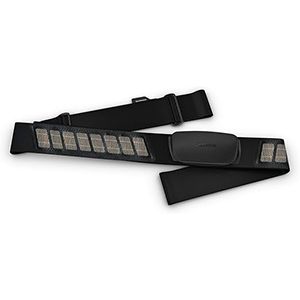
Garmin HRM-Dual
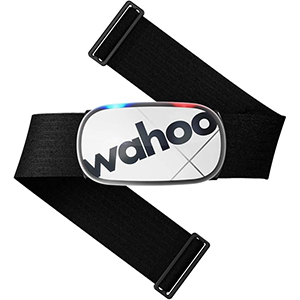
Wahoo TICKR X
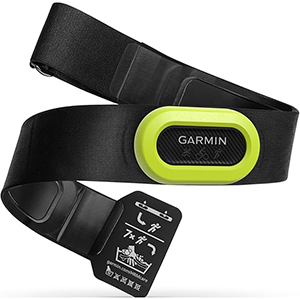
Garmin HRM-PRO
To make your decision easier, we’ve broken down the key things to look for when buying a heart rate monitor. We’ve also tested and reviewed the top options across different price ranges. Here are our top 5 picks for the best heart rate monitors for Cycling in 2025.
Tracking your heart rate is vital for managing training intensity, boosting endurance, and achieving your peak cycling performance.
1. Garmin HRM-Dual
In the cycling world, Garmin is a household name. Known for its top-tier cycling computers and durable gear—one of which even accompanied a member of our team on a bikepacking trip across Morocco—Garmin has a strong reputation for performance and reliability.
The Garmin HRM-Dual earns its name from its dual connectivity via both Bluetooth and ANT+, offering seamless pairing with a wide range of devices within a 3-meter range. While dual connectivity is standard among most heart rate monitors today, we experienced flawless performance with the HRM-Dual—no dropouts, no fuss.
Like Garmin’s higher-end HRM-Pro, this monitor runs on a CR2032 coin cell battery. It requires a screwdriver to replace (unlike others that can be opened with a coin), but the good news is you’ll only need to do this about once every 3.5 years.
The unit is attached to an adjustable strap with a generous length range from 63.5cm to 132cm, providing a snug and secure fit for most riders. The sensor sits on the side of your chest for comfort and stability.
Since heart rate monitors often endure sweat and moisture, it’s helpful that the strap is easily removable and washable, keeping things hygienic after long rides or intense training sessions.
Overall, the Garmin HRM-Dual combines dependable performance with a long lifespan—ideal for serious cyclists looking for a reliable training tool.
Pros:
- Dual connectivity (Bluetooth & ANT+) for wide device compatibility
- Excellent battery life
Cons:
- Battery replacement requires a screwdriver
- Slightly pricier than basic options
2. Wahoo TICKR X
We tested the more advanced Tickr , which goes beyond basic heart rate tracking by also measuring indoor cycling cadence and running dynamics—making it a versatile option for multi-sport athletes.
One standout feature of the Tickr X is its on-device data storage, allowing you to record workouts without needing to connect to a phone or head unit. Just strap it on, get moving, and sync later—it’s that simple. This was especially handy during cross-training activities like running, yoga, and bouldering, as well as for shorter, lower-intensity rides. That said, for longer or more intense sessions, we’d still opt to pair it with a head unit for power tracking and navigation.
In terms of design, the Tickr X does away with the traditional chest strap hook. Instead, it uses the poppers that attach the strap to the sensor pod as the fastening mechanism. This design makes it easier to put on and take off, and avoids potential discomfort from hooks—though this may vary by user.
It’s a sleek, comfortable setup, but based on past experience with older models, those poppers can wear out over time. While this version hasn’t shown any durability issues so far, it’s something to be aware of if you’re planning to use it heavily over several years.
Overall, the Wahoo Tickr X is a smart, well-rounded heart rate monitor, particularly well-suited to athletes who mix cycling with other forms of training.
Pros:
- Comfortable and secure fit
- Built-in data storage
- Easy app integration
- Free Wahoo app is great for users without other gear
Cons:
- Poppers may wear out with repeated use over time
3. Garmin HRM-PRO
Garmin Edge cycling computers are among the most popular on the market, and even the entry-level models support heart rate monitoring. The Garmin HRM-Pro is the brand’s flagship heart rate monitor, combining features from all its sport-specific models into one powerful device.
What sets the HRM-Pro apart is its integration with Garmin Connect IQ, giving users access to a wide array of free, data-focused tracking apps on Garmin’s own platform—essentially Garmin’s version of Strava. It covers all the essential heart rate tracking functions and goes further by offering step counting and running dynamics like gait analysis.
It also features on-device storage, allowing it to record data when you’re not connected to a device—handy for activities like swimming or running where wearing a smartwatch or head unit isn’t practical. For most cyclists, though—especially those riding with a bike computer—this feature may only be useful in specific situations, such as track cycling. Nevertheless, we found its data tracking to be consistently reliable and accurate.
Like the HRM-Dual, the Pro supports both ANT+ and Bluetooth, making it compatible with a wide range of devices for indoor training, outdoor riding, and even gym workouts.
The CR2032 coin cell battery lasts about a year with regular use, and its status can be checked via Garmin Connect. However, at roughly twice the price of the HRM-Dual, the HRM-Pro may not offer added value if you’re only interested in basic cycling metrics.
Garmin HRM-Pro is a top-tier choice for multi-sport athletes or data enthusiasts, but may be overkill for riders who only want core cycling stats.
Pros:
- Highly accurate and reliable data
- No signal dropouts
- Waterproof and suitable for swimming
Cons:
- Premium price for features many cyclists won’t use
4. Polar Verity Sense
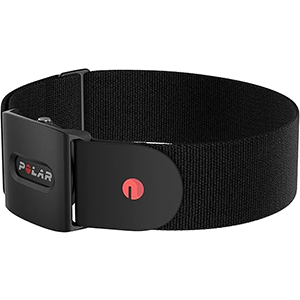
The Polar Verity Sense is a popular optical heart rate monitor designed for cyclists who prefer an alternative to traditional chest straps. Worn on the arm or wrist, it uses advanced optical sensors to provide continuous and accurate heart rate tracking during cycling, running, and other activities.
One of its standout features is dual Bluetooth and ANT+ connectivity, making it compatible with most cycling computers, smart trainers, and fitness apps. It also integrates smoothly with Polar’s training platform, as well as Strava, TrainingPeaks, and other third-party apps.
The Verity Sense is IP68 waterproof-rated, allowing it to be used for swimming and water sports. It’s also lightweight and comfortable, making it a great choice for long rides or indoor training sessions.
However, it’s worth noting that it may not be as durable as chest strap monitors in extreme weather or rugged conditions. Additionally, Bluetooth connectivity can occasionally drop with some devices, though this isn’t a widespread issue.
Overall, the Polar Verity Sense is a versatile and convenient option for cyclists prioritizing comfort, accuracy, and app compatibility.
Pros:
- Comfortable and lightweight for extended use
- Accurate optical heart rate tracking
- Waterproof (IP68) for swimming
- Dual Bluetooth and ANT+ support
- Compatible with popular training apps
Cons:
- Limited battery life for multi-day use
5. Wahoo TICKR FIT
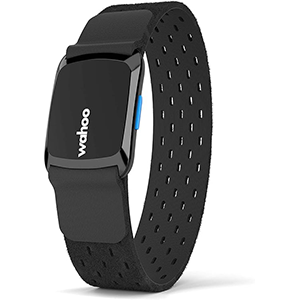
The Wahoo TICKR FIT is a reliable and budget-friendly heart rate monitor that uses optical sensor technology to deliver accurate heart rate readings. Designed to be worn on the forearm, it offers a comfortable alternative to traditional chest straps, especially for those who find chest-mounted monitors restrictive or uncomfortable during longer rides or intense workouts.
Equipped with dual-band Bluetooth and ANT+ connectivity, the TICKR FIT easily pairs with cycling computers, smart trainers, and fitness apps like Zwift, Strava, and Wahoo’s own app. It’s especially well-suited for indoor training and integrates seamlessly with Wahoo smart trainers.
The adjustable armband ensures a secure fit during high-intensity sessions, whether you’re cycling, running, or participating in fitness classes. With a water resistance rating of up to 1.5 meters, it stands up to sweat and light rain, making it a solid option for outdoor rides as well.
However, the battery life is relatively limited compared to chest strap models, meaning it may need more frequent recharging—particularly on long or multi-day rides.
Overall, the TICKR FIT offers comfort, accuracy, and versatility at a great value.
Pros:
- Comfortable forearm design
- Accurate optical tracking
- Dual Bluetooth/ANT+
- Waterproof
- Great compatibility with apps and devices
Cons:
- Limited battery life
What is a heart rate monitor?
Your heart plays a vital role in delivering oxygen-rich blood and nutrients throughout your body. During exercise, it works harder to meet the increased demands of your muscles. A heart rate monitor tracks how many times your heart beats per minute (BPM), giving you insight into how hard your body is working. This data is often categorized into training zones, helping you analyze how different intensities of exercise impact your cardiovascular fitness.
How can cyclists use heart rate monitors?
Cyclists most commonly use heart rate monitors to track interval training—short bursts of high-intensity effort followed by periods of rest. This type of training pushes the body to adapt, improving endurance and performance over time.
Intervals can be measured using RPE (rate of perceived exertion), power (actual output in watts), or heart rate (your body’s response to effort). Ideally, power and heart rate are used together to assess how much strain the body undergoes to achieve a certain output. However, since power meters can be expensive, heart rate monitors offer a more accessible way to ensure training is at the right intensity.
Each interval is usually done within a specific heart rate zone, based on a rider’s maximum or threshold heart rate. For example, one cyclist might have a threshold of 180 BPM, while another’s could be 160 BPM—these zones are highly individual. Training with a heart rate monitor helps riders hit the right BPM during workouts for optimal results.
Tracking heart rate over time can also show improvements in fitness. A stronger heart typically results in a lower resting heart rate, which can be measured upon waking. A sudden rise in resting heart rate can signal fatigue, illness, or overtraining—indicating it may be time to take a break.
How do heart rate monitors connect to devices?
Most heart rate monitors use Bluetooth or ANT+ to connect to devices like cycling computers, smartwatches, or smartphones. This allows for real-time data tracking and performance analysis.
What’s the difference between Bluetooth Smart and ANT+?
Bluetooth Smart and ANT+ are the two most common wireless communication protocols in cycling tech. Bluetooth transfers data at a higher bitrate, which is useful for functions like audio streaming but uses more battery power—a drawback for long rides.
ANT+ is more energy-efficient, making it a better option for endurance sessions. It also supports multiple connections, so your heart rate monitor can be paired with both a cycling computer and a smartphone at the same time.


Leave a Reply