
If you’re in the market for the best APS-C camera, you’re in luck—there are plenty of excellent options to choose from. These range from the increasingly rare compact cameras to mirrorless models boasting impressive specs.
While full-frame cameras still dominate in the professional arena, it’s not uncommon for pros to build a successful career using just an APS-C camera. Whether this trend will continue is a debate for another time.
For now, we’ve curated a selection of compact, DSLR, and mirrorless APS-C cameras to help you find the right fit. There’s something here for every type of photographer and budget. Keep reading to discover which one suits you best.
Top pick
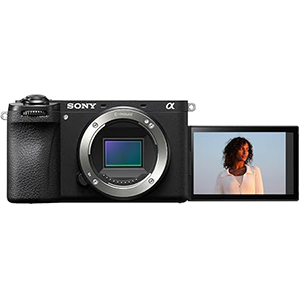
Sony Alpha 6700
Editor’s choice
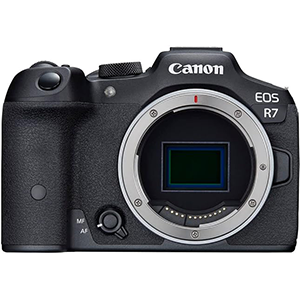
Canon EOS R7
Best value
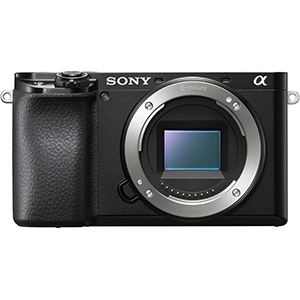
Sony Alpha A6100
The top APS-C cameras offer high pixel counts, advanced autofocus (AF), and cutting-edge image stabilization (IS) systems. Whether you’re already an APS-C fan or need more convincing, you’ll find something here to meet your needs.
Now that we’ve highlighted some of the best APS-C cameras on the market, let’s dive into the details of why we recommend them.
1. Sony Alpha 6700
Sony is renowned for its exceptional autofocus, and the Sony a6700 upholds that legacy. But this camera offers much more than just AF capabilities—it’s packed with features that make it a standout choice for anyone looking for an APS-C camera.
Its 26 MP sensor provides ample resolution for most needs, and the a6700 can capture 4K video at an impressive 120 fps. With a shooting speed of up to 11 fps, it surpasses the performance of many professional-level cameras from just a few years ago. The buffer supports up to 59 RAW images, making it a solid option for sports and wildlife photographers.
The autofocus system features 759 phase-detection points that cover 95% of the sensor, allowing you to track a wide variety of subjects, including humans, animals, birds, planes, and cars. It keeps the focus locked as your subject moves, ensuring sharp images.
Another valuable feature is its 5-axis in-body image stabilization (IS), which works in tandem with image-stabilized lenses. This means you can capture sharp photos even in low light.
Image stabilization is also a big plus for video, which is why Sony cameras are popular among filmmakers. The a6700 offers 4K video at 120 fps, though with a slight crop of the sensor. If you prefer using the entire sensor, you’ll still get excellent results at 60 fps. For content creators posting to social media, even the cropped footage will be more than sufficient.
The fully articulating touchscreen is another bonus for video users, allowing for easy framing at awkward angles or for selfies. And if you prefer using a viewfinder, the a6700’s electronic viewfinder (EVF) delivers a bright image with a 120 fps refresh rate.
One of the advantages APS-C cameras have over full-frame models is their compact size, and Sony makes the most of that with the a6700’s rangefinder-style design. While not everyone loves the offset EVF, it’s a practical feature for shooting in bright conditions, and certainly better than having no viewfinder at all.
Overall, the Sony a6700 strikes a great balance between the needs of photographers and videographers. However, like many Sony cameras, its menu system can be a bit cumbersome, which might be a drawback in an increasingly competitive market.
2. Canon EOS R7
If you’re after a more feature-rich APS-C camera, the Canon EOS R7 might be the perfect choice. It’s incredibly fast, boasts excellent autofocus, and even comes with a self-leveling sensor—all packed into a body that’s significantly smaller than a DSLR.
The Canon EOS R7 Mirrorless Camera is a versatile tool for photographers and content creators. With a 32.5-megapixel APS-C CMOS sensor, it delivers high-resolution images and impressive detail. The camera’s Dual Pixel CMOS AF technology ensures fast and accurate autofocus, making it ideal for capturing action shots and videos.
This camera supports 4K video recording, providing high-quality footage for vlogging or professional projects. The 5-axis in-body image stabilization system helps to reduce camera shake, ensuring clear and stable images even in low light conditions. The EOS R7 also features a high-speed continuous shooting mode, with up to 15 frames per second using the mechanical shutter and 30 frames per second with the electronic shutter.
The compact and lightweight design of the EOS R7 makes it easy to carry around, perfect for on-the-go shooting. The camera’s ergonomic grip ensures comfortable handling during extended use.
Overall, the Canon EOS R7 is a powerful and reliable camera that caters to both amateur and professional photographers, providing excellent image quality and advanced features for diverse shooting needs.
3. Sony Alpha A6100
The Sony a6100 is one of the best-value APS-C cameras on the market, particularly for those who want a straightforward, reliable camera without too many advanced features.
Don’t mistake this for a basic model—it comes with some solid specs, including a 24.2 MP sensor, 11 fps burst shooting, and eye, face, and smile-detect autofocus. It does lack some specialized features, like a live-view color histogram in the EVF, customizable minimum ISO in auto ISO mode, and a headphone jack.
For someone moving up from a smartphone to a more capable camera, the a6100 offers plenty to like. Despite its small size, it’s easier to hold for video work compared to a smartphone, and the bright, fast EVF enhances traditional photography. The 120 fps refresh rate ensures responsiveness but does take a toll on battery life, and the small battery tends to drain quickly.
Its autofocus system, using both contrast and phase detection with 425 points, tracks eyes and faces with precision. The camera can recognize up to eight faces, allowing you to select the one you want to follow. Even during 11 fps burst shooting, the AF keeps tracking, making it easy to capture sharp, focused shots—even for beginners.
The automatic exposure also adds to its simplicity, offering near-perfect results with a point-and-shoot ease. Just take the camera out, power it up, and hit the shutter—most of the time, you’ll get a well-exposed, perfectly focused shot. While composition is still in your hands, the camera handles the technical settings, letting you focus on creativity.
Overall, the Sony a6100 makes capturing great photos effortless. Although Sony’s menu system can be a bit confusing, which detracts slightly from the user experience, this compact, lightweight camera excels in both still photography and video.
4. Fujifilm X-H2
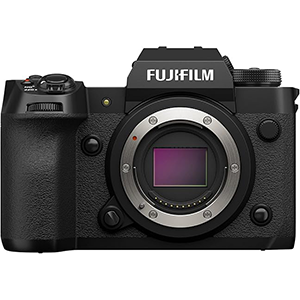
The Fujifilm X-H2 is a robust and stylish APS-C mirrorless camera, featuring a traditional design with a central viewfinder and a substantial handgrip. Its impressive specs include a 40 MP sensor, 20 fps burst shooting, and an astonishing maximum shutter speed of 1/180,000 s.
If 40 MP doesn’t quite satisfy, the X-H2 offers a Pixel Shift mode that takes image resolution to another level. In this mode, the camera captures 20 RAW images in five sets of four, with the sensor shifting slightly between each shot to expose every pixel five times. These images are later combined to create a stunning 160 MP image. The process takes about a minute on a computer, and the final file is massive—around 640 MB. However, this mode is best for static subjects, as any movement can ruin the shot.
That said, the image quality surpasses what any film camera could achieve. The sensor delivers remarkable clarity and sharpness, and the camera is capable of shooting 8K video at 30 fps—making it one of the best-value cameras for those venturing into ultra-high-definition video. It also offers 6.2K at 30 fps, 4K at 60 fps, and 1080p at 240 fps for slow-motion footage.
Autofocus performance is excellent, featuring eye, face, and object recognition. The X-H2 also excels in low-light conditions, thanks to its strong ISO invariance.
Overall, the Fujifilm X-H2 stands out as the best-value 8K camera available and makes a compelling case as a versatile, general-purpose option for both photographers and videographers.
5. Fujifilm X-T5
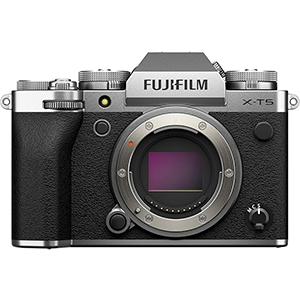
The Fujifilm X-T5 is designed with stills photography in mind. While it can shoot video, this camera is built for photographers who love the classic feel of traditional stills photography. Its retro design and manual control dials give users complete exposure control, offering an experience that harks back to the golden age of film cameras.
Many photographers argue that the APS-C X-T5 rivals full-frame cameras in performance. With its impressive 40.2 MP sensor, it surpasses many full-frame models in terms of resolution. And for those seeking even more detail, the Pixel Shift mode allows for stunning 160 MP images.
Fujifilm maximizes the advantages of mirrorless autofocus by incorporating 3.3 million on-sensor phase-detection pixels, covering nearly the entire sensor. An advanced AI processor enhances subject recognition, allowing the autofocus system to track a wide range of subjects, from humans and animals to planes, trains, and automobiles.
The X-T5 offers a burst rate of 15 fps with the mechanical shutter, and this increases to 20 fps with the electronic shutter. It also boasts an extraordinary maximum shutter speed of 1/180,000 s—54,000 times faster than the blink of an eye!
The Fujifilm X-T5 combines good looks with solid build quality and exceptional image performance. It’s supported by a vast range of lenses, so you’ll have no trouble assembling a comprehensive and versatile camera system.
Conclusion
The cameras featured in this review offer exceptional quality across the board. From stunning image clarity to advanced autofocus and impressive versatility, these models set a new standard.
Once you’ve identified your specific needs, you’re bound to find the perfect camera among these top contenders.


Leave a Reply