
Maintaining a well-groomed appearance requires a commitment to self-care, often involving extra time spent in front of the mirror or additional maintenance routines throughout the day. For men, a crucial tool in their grooming arsenal is the clipper—be it a beard trimmer, hair clipper, or a versatile all-in-one device.
Recognizing the significance of clippers, it becomes imperative to invest time in their maintenance. This blog aims to provide a comprehensive understanding of how to properly care for your clippers. A properly functioning clipper or beard trimmer can be the defining factor between an average look and achieving the perfect cut.
Mastering the Art of Oiling Hair Clippers and Beard Trimmers: A Comprehensive Guide
When you invest in hair clippers or beard trimmers, you’ll often find a small tube of oil accompanying the package. If you’ve never utilized this oil, it’s time to start. For those already familiar with the practice, maximizing the benefits of oiling is crucial.
In this guide, we’ll unravel everything you need to know about caring for your clippers, ensuring that your significant investment in grooming tools doesn’t go to waste. A well-maintained clipper or beard trimmer can make all the difference in achieving that flawless, polished look.
Benefits of Lubricating Beard Trimmers or Hair Clippers

The first question that may come to mind is why exactly should you bother oiling or lubricating your clipper or trimmer? Simply put, a hair clipper or beard trimmer is an electric device with blades, concealing numerous small mechanical components that drive those blades. Similar to a car engine requiring oil, your clipper needs proper lubrication.
A decent clipper or trimmer can last several years, provided it is well-maintained. Neglecting proper care may result in the blades catching on hair, signaling inadequate lubrication. Regular maintenance not only saves money in the long run but also prevents rusting and misalignment of blades, ensuring smooth operation.
How Often to Oil:
Experts and leading manufacturers recommend oiling clippers with each use to guarantee optimal performance and longevity.
Things Needed to Oil Your Clippers:
A Brush
Use a clean brush to remove built-up hair, grease, and debris. The small brush that comes with the clipper set works well, or you can use a clean toothbrush.
Lubricating Oil
The oil provided with the clippers is ideal for lubricating the blades due to its dropper tip. If you run out, it’s easily replaceable.
Instructions for Oiling Hair Clippers:
Clean the Clipper
Ensure the clipper is free of debris. Use a brush to remove any hair or gunk. Avoid using water; rubbing alcohol is a suitable alternative.
Apply the Lubricating Oil
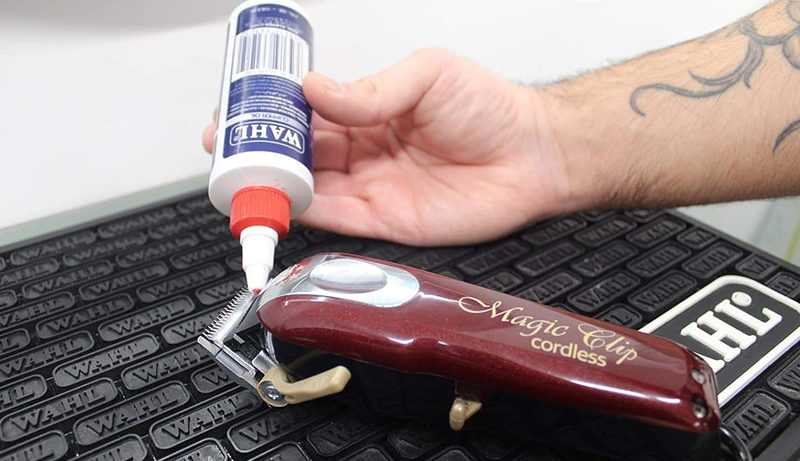
With the clipper turned off, use the dropper tip to apply a few drops of oil in between the blades and their sides.
Turn the Clipper On
Run the clipper for about 20 to 30 seconds to ensure the oil spreads to all parts.
Turn the Clipper Off
After oiling, turn the clipper off. Wipe off any excess oil from the body.
Instructions for Oiling Beard Trimmers

The process for oiling a trimmer is similar, but it requires a steadier hand due to its smaller size.
Clean the Trimmer
Remove any hair stuck between the blades.
Apply the Lubricating Oil
With the trimmer off, apply a small amount of oil. Ensure it doesn’t void the manufacturer’s warranty.
Wipe Off Any Extra Oil
Wipe off excess oil with a clean cloth.
Alternatives to Clipper Oil:
In emergencies, olive oil or vegetable oil can be used as alternatives. Apply a small amount using your finger and turn the clipper on briefly to ensure even distribution.
Oils to Avoid:
Never use high viscosity oils like WD-40, extra virgin olive oil, or pure olive oil. Stick to light or thin oils, specifically designed for clippers.
Important Reminder: If a clipper hasn’t been used for an extended period, lubricate it before use to prevent accidents due to lack of lubrication.
Conclusion
Maintaining your beard trimmer or hair clipper through regular oiling is essential for its prolonged life and consistent performance. This may seem like a small task, but it ensures a satisfying grooming experience, akin to achieving the perfect haircut. By understanding which oils to use, how to apply them, and what to avoid, you’re well-equipped for effective maintenance.
Now that you possess the knowledge, share your tips and experiences in the comments to help others keep their clippers in top-notch condition.


Leave a Reply